 By Nick Quirk
August 8, 2026
9 min read
By Nick Quirk
August 8, 2026
9 min read
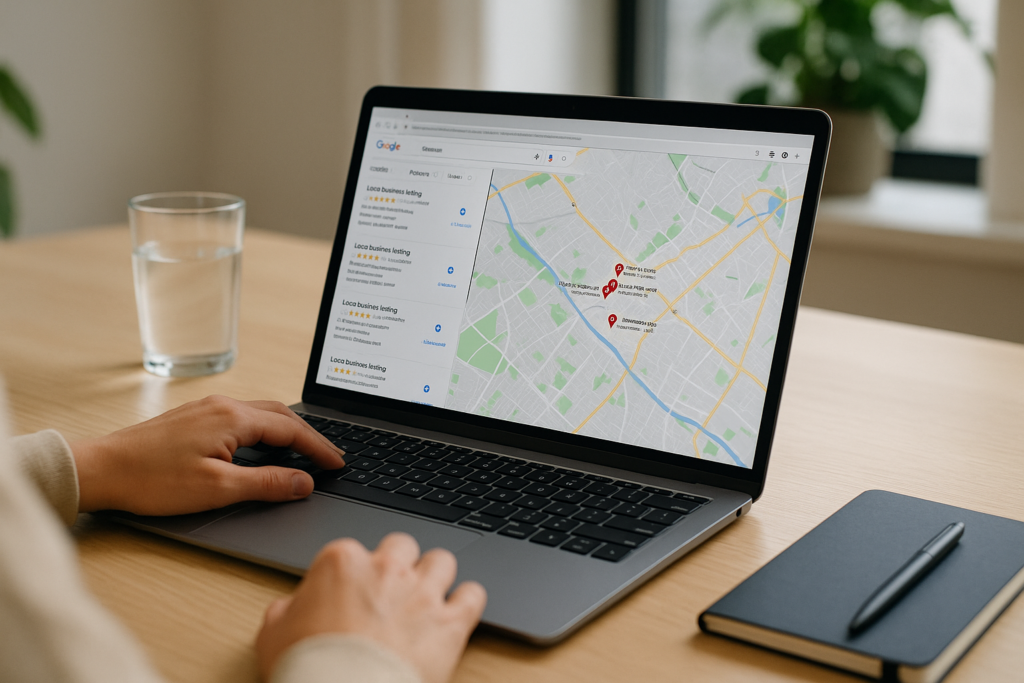
Ranking in the Google Local Pack (the Map Pack) comes down to three signals Google weighs together: relevance, distance and prominence. The three business listings that sit above the organic results collect the majority of clicks for “near me” searches, which is why a plumber in the pack outperforms a plumber sitting at position four on the blue links. This guide covers what actually moves those three slots, how to diagnose why you are stuck, and how to measure progress properly instead of refreshing your own search results.
What the Google Map Pack Actually Is
The local pack is the boxed cluster of three business listings, with a map above them, that Google shows when a query carries local intent. It pulls from Google Business Profile data rather than your website’s indexed pages, though your site still feeds the system. Google has run this format in various shapes since 2007, shrinking from seven results to three in 2015.
Two things separate it from the standard organic listings. First, the ranking order changes depending on where the searcher is standing, so there is no single “position 1” for a local pack result. Second, the listing carries conversion elements the organic results do not: star rating, review count, hours, a call button and directions.
The Three Ranking Factors Google Publicly Names
Google is unusually direct about local ranking. In its own documentation on how local results are ranked, it lists three inputs:
- Relevance: how well your profile and website match what the person typed. Categories, services, business description and on-site content all feed this.
- Distance: how far your verified address (or service area centroid) sits from the searcher or the location named in the query.
- Prominence: how well known your business is, measured through reviews, links, citations, press mentions and organic ranking strength.
You cannot change distance without moving, which frustrates most owners. You can, however, widen the radius at which you still win by pushing prominence and relevance high enough that Google is willing to show you from further away.
Step 1: Fix the Profile Before Anything Else
Most listings that fail to rank are missing basic completeness rather than backlinks. Claim and verify the profile, then work through every field Google offers, because empty fields are lost relevance signals.
- Primary category: pick the single most accurate one. “Emergency Plumber” and “Plumber” produce different result sets, and the primary category carries far more weight than secondary ones.
- Secondary categories: add three to five that genuinely describe what you do, not aspirational ones.
- Services and products: list them individually with short descriptions, since these strings get matched against long-tail queries.
- Hours, holiday hours and attributes: incomplete hours suppress visibility during the exact moments people search.
- Photos: upload geotagged exterior, interior and team shots monthly. Listings with active photo streams tend to hold higher engagement rates.
Our walkthrough on how to optimize your Google Business Profile in 2026 goes field by field if you want the longer version.
Step 2: Make Your Citations Boring and Identical
Google cross-references your name, address and phone number across the wider web to confirm the business is real and consistent. A suite number missing on one directory and present on another creates ambiguity, and ambiguity costs you prominence.
Audit the big aggregators first (Data Axle, Foursquare, Apple Business Connect), then the vertical directories that matter in your industry. Read our notes on NAP consistency in local search before you start editing, because fixing them in the wrong order means re-fixing them later.
Step 3: Build Review Velocity, Not Just Review Count
A business with 180 reviews collected four years ago competes poorly against one adding six a month. Recency and steady flow appear to matter as much as the raw total, and the review text itself feeds relevance when customers mention the service and the city.
We cover this topic in more depth in Creating Location Pages That Actually Rank.
For a closer look at this topic, see our guide: Video SEO: How to Rank Your Videos on Google and YouTube.
For a closer look at this topic, see our guide: Zero-Click Searches: How to Survive When Google Answers the Query.
According to BrightLocal’s Local Consumer Review Survey, the large majority of consumers read reviews before contacting a local business, so the same asset that lifts ranking also lifts your click-through rate inside the pack. Ask at the moment of highest satisfaction, send a direct review link by SMS, and reply to every single one within 48 hours. There is more detail in our guide to getting more local reviews.
Step 4: Give Google a Website Worth Trusting
Your website is the prominence engine behind the listing. Google reads it to confirm what you do and where, and a weak site caps how far your local pack visibility can travel.
- Build a dedicated page per service and per city you genuinely serve, with unique content on each (600 words minimum, ideally with local project examples).
- Embed your NAP in the footer and mark it up with LocalBusiness schema.
- Keep mobile load time under 2.5 seconds, since most map pack traffic arrives on a phone.
- Submit a clean sitemap so new location pages get discovered quickly. Our post on creating and submitting XML sitemaps covers the process.
The Gap Most Guides Skip: Diagnose Before You Optimize
Here is where most advice falls short. Every article lists the same tactics, but almost none tell you which one your business actually needs. Before spending three months on citations, work out which of the three factors is failing.
Run a grid scan, not a search
Searching your own keyword from your office tells you nothing useful, because you are standing at the centre of your own proximity advantage. Use a grid rank tracker (Local Falcon, BrightLocal’s geo grid, Places Scout) to plot your position across a 7×7 grid covering your service area. The resulting heat map shows the radius where you rank in the top three and where you fall off a cliff.
Read the pattern
- Strong near your pin, dead 2 miles out: prominence problem. Reviews, links and brand mentions are your bottleneck.
- Weak even at your own address: relevance or eligibility problem. Check your primary category, suspended status, duplicate listings and whether your address type matches Google’s guidelines.
- Strong for one service, invisible for another: relevance gap. The service is missing from your profile’s services list and from your site’s page structure.
- Fluctuating wildly week to week: usually a competitor filtering issue or a shared-address conflict rather than something you did.
Re-run the same grid monthly. A prominence campaign that is working shows up as the green zone expanding outward, often 6 to 10 weeks before you notice any change in call volume.
Step 5: Expand Coverage Without Faking Locations
Fake lead-gen addresses and virtual offices get filtered or suspended, and Google’s spam reporting has become faster at catching them. The legitimate route is to earn prominence strong enough that your radius stretches, then support it with content built for individual neighbourhoods and ZIP codes.
That means writing pages that reference real landmarks, local regulations and jobs you have completed in each area, rather than swapping the city name in a template. Our breakdown of hyper-local SEO for neighborhoods and ZIP codes explains how to structure that without tripping doorway page filters.
Step 6: Keep the Profile Active
Engagement signals feed back into ranking. Posts, Q&A, messaging response rate and photo uploads all indicate an actively managed business.
- Publish one Google Post weekly, ideally tied to a real offer, event or completed job.
- Seed and answer 5 to 10 questions in the Q&A section using natural customer language.
- Turn on messaging only if someone will reply within a few hours.
- Update seasonal hours before the holiday rather than after complaints appear.
None of these are dramatic ranking levers on their own. Together they hold your position when a well-funded competitor starts pushing.
Realistic Timelines
A neglected profile that gets properly configured often moves within 2 to 4 weeks, because the fixes are relevance-based and Google recrawls profile data quickly. Prominence work runs slower: expect 3 to 6 months for a review and link campaign to visibly widen your grid, longer in dense metros where the top three listings all hold 300-plus reviews.
If you would rather have someone run the diagnosis and the campaign, there are real advantages to working with a local agency that already knows the competitive landscape in your market.
Frequently Asked Questions
How to rank on Google Map Pack?
Rank in the Map Pack by optimizing the three factors Google names: relevance (accurate primary category, complete services list, matching website content), distance (your verified address relative to the searcher) and prominence (reviews, citations, backlinks and organic strength). Start with a fully completed Google Business Profile, since incomplete listings rarely rank regardless of how strong the website is.
How to rank in the map pack?
Most businesses see the fastest gains from three actions: selecting the single most accurate primary category, generating 5 to 10 fresh reviews per month, and building a dedicated service page for each offering on the website. Track results with a geo grid tool rather than manual searches, because your own location distorts what you see.
How to rank in local pack?
Local pack rankings require an eligible, verified listing plus prominence signals that let Google show you from further away. Confirm the listing is not suspended or duplicated, standardize your name, address and phone across major directories, then invest in reviews and locally relevant links over a 3 to 6 month window.
How to rank higher in Google Local Listings?
Improve the two factors you control: relevance and prominence. Add every service you offer to the profile with descriptions, publish weekly Google Posts, answer Q&A entries, keep photo uploads steady, and earn mentions from local news sites, suppliers, chambers of commerce and sponsorship pages, which count as both citations and links.
Want a Straight Answer on Why You Are Not Ranking?
A grid scan and a profile audit usually reveal the bottleneck in under an hour, and the fix is often narrower than people expect. Get in touch with SEO Quirk and we will tell you which of the three ranking factors is holding your listing back.