 By Nick Quirk
August 6, 2026
8 min read
By Nick Quirk
August 6, 2026
8 min read
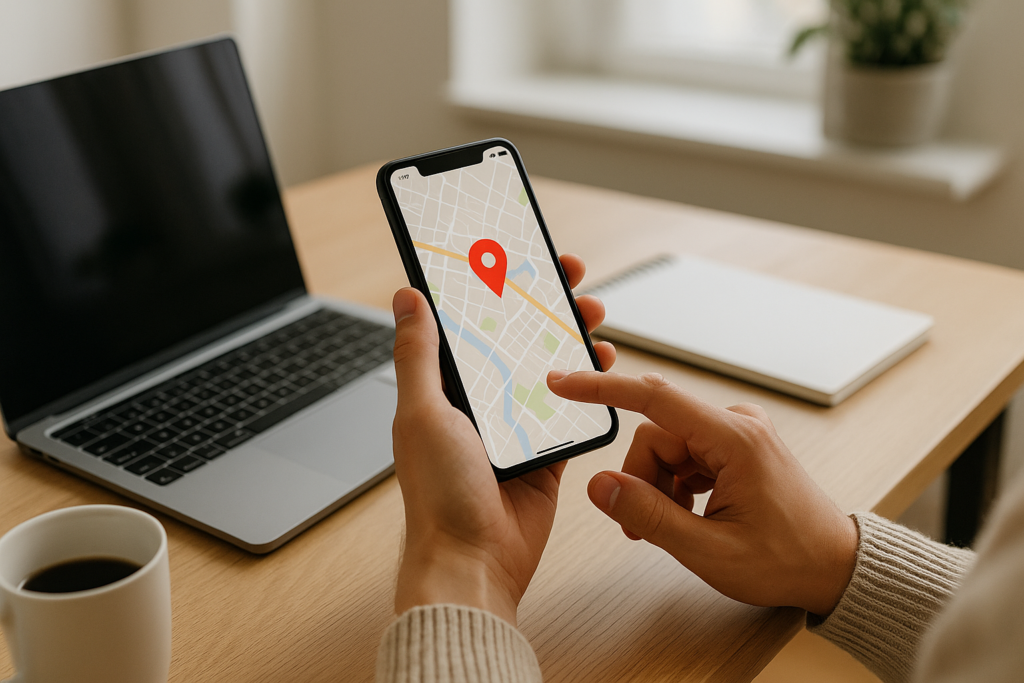
NAP consistency in local search means your business name, address and phone number appear in exactly the same format everywhere they show up online: your website, your Google Business Profile, Yelp, Apple Maps, data aggregators, chamber directories and every random listing you forgot you created in 2014. Search engines use that repetition as a confidence signal, and when the details conflict, confidence drops. This guide covers what NAP consistency actually affects, how to audit yours, and the part most articles skip: what to do when your business genuinely changes.
What NAP Stands For (and What Counts as a Mismatch)
NAP is shorthand for Name, Address, Phone. Some practitioners extend it to NAP+W (adding website URL) or NAPU, but the core three are what local search algorithms cross-reference most heavily when deciding whether two listings describe the same business.
The tricky part is that a mismatch does not require a wrong answer. It only requires a different one. These all count as inconsistencies:
- Name variants: “Riverside Dental” vs. “Riverside Dental Group LLC” vs. “Riverside Dental – Dr. Amy Chen”
- Address formatting: “1420 N. Broad Street, Suite 3” vs. “1420 North Broad St #3”
- Phone numbers: a tracking number on your website while directories list the main line
- Suite and floor data: present in one listing, dropped from another
- Old locations: a previous address still live on a directory you never claimed
Search engines are far better at resolving these conflicts than they were a decade ago. That does not make consistency irrelevant, it just changes where the damage shows up, which is worth understanding before you spend a weekend fixing citation formatting.
Why NAP Consistency Still Influences Local Rankings
Google has said for years that prominence, relevance and distance drive local pack results. Citations feed prominence, and inconsistent citations weaken the signal. In Google’s own guidance on improving local ranking, complete and accurate information is listed as the first lever a business owner controls.
Think of it as entity resolution. Every mention of your business is a vote that a specific company exists at a specific place with a specific contact point. When 40 sources agree and 6 disagree, the algorithm still gets there. When 22 agree and 18 disagree, the entity gets fuzzy, and fuzzy entities do not win the three-pack.
The three effects worth caring about
- Ranking confidence: conflicting data dilutes the authority of your strongest citations and can suppress visibility for competitive local queries.
- Duplicate listings: mismatched data is the number one cause of duplicate Google Business Profiles, which split reviews and photos across two entries.
- Lost calls: a dead phone number on a directory does not just hurt SEO, it sends a ready-to-buy customer to whoever answers.
That third point is the one most businesses underestimate. BrightLocal’s ongoing consumer research has repeatedly found that a majority of people lose trust in a business when they encounter incorrect contact details, and many simply move on to the next result rather than hunting for the right number.
The Gap Nobody Covers: Consistency During Change
Most articles on this topic assume your details are static and you just need to clean up sloppy data entry. Real businesses move offices, rebrand, add locations, port phone numbers and switch from a home address to a coworking suite. Consistency during a transition is a different problem, and it is where the most SEO damage actually happens.
A sequencing plan for a move or rebrand
- Update Google Business Profile first, then wait 48 to 72 hours for the change to propagate before touching anything else. Google is the primary source many aggregators read from.
- Update your website next, including the footer, contact page, schema markup and any location landing pages.
- Push to the data aggregators (Data Axle, Foursquare, Localeze and the major submission networks) so downstream directories inherit the corrected record.
- Fix the top 15 to 25 manual citations by hand: Yelp, Bing Places, Apple Business Connect, Facebook, Better Business Bureau, Yellow Pages, industry directories and your local chamber.
- Keep the old phone number forwarding for at least 6 to 12 months. Stale listings will keep sending calls, and a disconnected line is worse than an outdated one.
If you are moving and leaving old location pages behind, handle the URLs properly rather than deleting them. Our walkthrough on fixing 404 errors and setting up 301 redirects covers how to preserve the link equity those pages already earned.
How to Audit Your NAP in About Two Hours
You do not need enterprise software to find the majority of your problems. A focused audit catches most of what matters, and you can repeat it twice a year.
For a closer look at this topic, see our guide: How to Get More Local Reviews (and Why They Matter for SEO).
Step 1: Define the canonical record
Write down one version of your name, address and phone number and treat it as law. Use the format that appears on your USPS-standardized mail and your business registration, then never deviate. Decide now whether you use “Street” or “St”, “Suite” or “#”, and whether the LLC appears in the public-facing name (usually it should not).
Step 2: Search for yourself the ugly way
Run these queries in Google and note every result that surfaces a listing:
- Your exact business name in quotes
- Your phone number in quotes, with and without formatting
- Your street address in quotes
- Old phone numbers and old addresses in quotes
Searching the old data is the step people skip, and it is usually where the zombie listings turn up.
Step 3: Run a NAP checker
A free NAP checker or citation scanner will fill in what manual searching misses. BrightLocal Citation Tracker, Moz Local’s check tool and Semrush Listing Management all scan the major aggregators and flag mismatches, duplicates and missing listings. Free scans give you a directional read; paid tiers typically run $25 to $50 per month per location and handle the submissions for you.
Step 4: Log everything in a spreadsheet
Columns for directory, URL, current data, correct data, login credentials, date submitted and date verified. Citation edits are not instant. Some directories update in hours, others take 4 to 8 weeks, and a few require you to email support with proof of ownership.
Reinforcing NAP on Your Own Website
Your site should be the most authoritative source of truth about your business, and there are a few technical steps that make that explicit to crawlers.
- Put the full NAP in the footer as crawlable HTML text, not inside an image.
- Add LocalBusiness structured data with matching name, address and telephone properties. Our guide to schema markup and rich snippets walks through the implementation.
- Give each physical location its own page with unique content, embedded map and location-specific NAP.
- Handle call tracking carefully: use dynamic number insertion that swaps the number in JavaScript while the primary number stays in the HTML source and schema.
Citation cleanup is one piece of a wider strategy. If you are building local visibility from scratch, start with our complete guide to local SEO for small businesses and pair it with the profile work covered in optimizing your Google Business Profile in 2026.
How Often to Recheck
Twice a year is a reasonable baseline for a single-location business with stable details. Multi-location operations, franchises and any business that has moved in the last 24 months should check quarterly. Directories occasionally overwrite good data with scraped data, so consistency is maintenance, not a one-time project.
Set a calendar reminder, re-run your NAP checker, and spot-check the five listings that drive the most referral traffic in your analytics. Fifteen minutes a quarter prevents the slow drift that quietly costs you map pack position.
Frequently Asked Questions
How many citations does a local business need?
Most small businesses see diminishing returns after roughly 40 to 60 accurate citations, though competitive markets like legal or home services often need 80 or more. Quality and accuracy beat volume: 30 consistent listings on relevant, well-indexed directories outperform 150 mismatched ones.
Does a suite number difference really hurt my rankings?
A missing suite number is a minor mismatch and rarely moves rankings on its own, but it becomes a problem when it triggers a duplicate listing. Google may treat “100 Main St” and “100 Main St Ste 200” as two separate entities, which splits your review count and authority.
How long does it take to see results after fixing NAP inconsistencies?
Expect 4 to 12 weeks before ranking changes are measurable, since directories update on different schedules and search engines need time to recrawl. Duplicate listing removals often show faster effects, sometimes within 2 to 3 weeks of Google merging the entries.
Should I use a call tracking number in my Google Business Profile?
You can, as long as you enter the tracking number as the primary phone and your real main line as the additional number. Google explicitly supports this setup, which lets you attribute calls without breaking the consistency of your core record.
Is a free NAP checker good enough?
Free scanners from BrightLocal, Moz and Semrush will surface most major mismatches and duplicates, which is enough for a single-location business doing its own cleanup. Paid tools become worthwhile at three or more locations, mainly because they automate submissions and monitor for data overwrites.
Want Your Citations Cleaned Up Properly?
Auditing listings is tedious work, and it is the kind of thing that gets postponed until a competitor takes your map pack spot. SEO Quirk handles citation audits, duplicate removal and ongoing monitoring, and you can read more about what working with a local agency looks like before you commit to anything.