 By Nick Quirk
August 10, 2026
9 min read
By Nick Quirk
August 10, 2026
9 min read
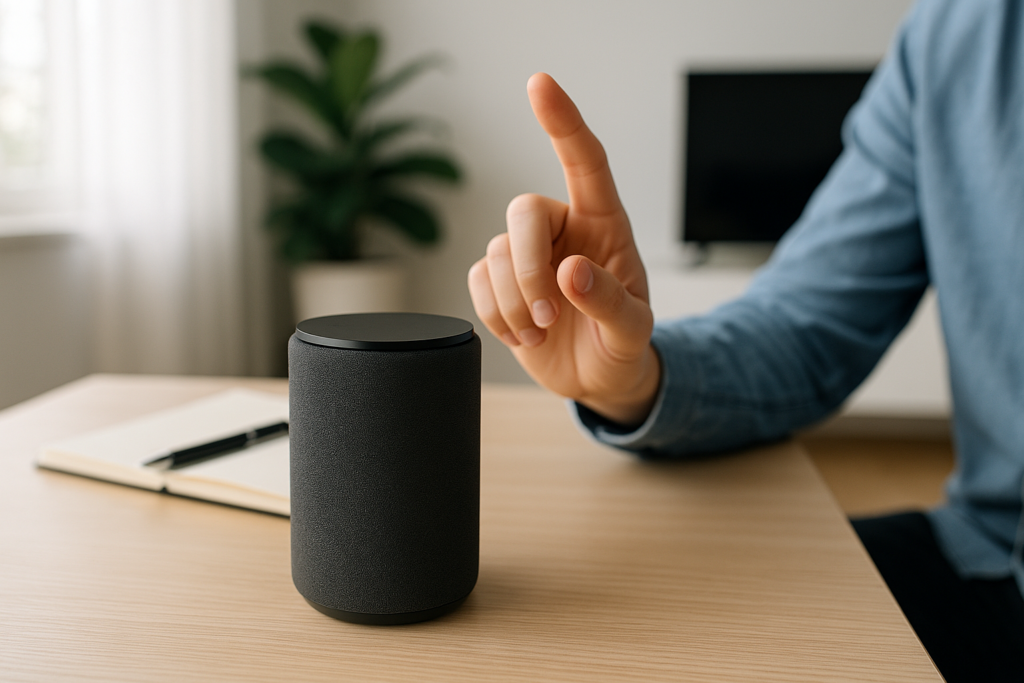
Voice search optimization is the practice of formatting your pages, listings and data so an assistant can read a single answer aloud, not so a user can scan ten blue links. On a smart speaker there is no page two, and usually no page one either: there is one spoken result, and everybody else loses. This guide covers how the major assistants pick that answer, how to structure content to become it, and how to measure whether any of it is working.
What Voice Search Optimization Actually Means Now
The old framing was “optimize for Siri, Alexa and Google Assistant.” In 2026 the more accurate framing is that you are optimizing for an answer layer that sits on top of search, and that layer now includes AI assistants, in-car systems, wearables and chat interfaces that speak responses back.
The mechanics are similar across all of them. An assistant parses a spoken question, resolves what the user probably meant, then pulls a short answer from a source it already trusts. Your job is to be that source, in a format short enough to be read out in about ten seconds.
That changes the unit of optimization. Instead of a 2,000-word page competing on breadth, you need dozens of discrete, self-contained answers living inside that page, each one clearly attached to the question it answers.
How Voice Queries Differ From Typed Ones
People type like they are filling out a form and speak like they are asking a person. That gap shows up in query length, phrasing and intent, and it should shape your keyword research.
- Length: typed queries average two to three words; spoken ones commonly run seven to nine.
- Question words: who, what, where, when, why, how and “can I” appear far more often in speech.
- Conversational filler: “what’s the best,” “do I need,” “is it worth” and similar phrasing that rarely gets typed.
- Local urgency: a large share of spoken queries have immediate intent, such as hours, directions, availability or “open now.”
- Follow-ups: assistants keep context, so the second question is often a pronoun-heavy fragment like “how much does it cost.”
Practically, this means your keyword list should include full questions pulled from People Also Ask, sales call transcripts, live chat logs and your support inbox. Those long, awkward phrasings are the ones that convert on voice, and they pair naturally with the supporting terms and related phrases the page already needs.
Know Where Each Assistant Gets Its Data
Most voice search SEO advice stops at “write good content,” which ignores that the three big assistants read from different databases. If you only maintain your Google presence, you have optimized for roughly one third of spoken queries.
Google Assistant and Google-powered devices
Google pulls local answers from your Business Profile and informational answers largely from featured snippets and its own knowledge graph. Getting the details right on your profile, from categories to hours to service areas, does more for spoken local results than almost any on-page tweak. Our walkthrough on optimizing a Google Business Profile in 2026 covers the fields that matter most.
Alexa and Amazon Echo
Alexa leans on Bing for web answers and on Yelp and other partner data for business information. A Bing Places listing takes maybe twenty minutes to claim and is ignored by most competitors, which makes it one of the cheapest wins available.
Siri and Apple devices
Siri draws on Apple Maps, Apple Business Connect and Yelp, with web results handled separately. If your Apple Business Connect listing is unclaimed or lists an old suite number, Siri will happily send callers somewhere else.
Across all three, your name, address and phone details need to match exactly wherever they appear, because assistants cross-check sources before speaking. That is why NAP consistency is not a box-ticking exercise but a prerequisite for being quoted at all.
Win the Answer Position With Short, Extractable Copy
Featured snippets remain the main harvesting ground for spoken results. An often-cited Backlinko analysis of 10,000 Google Home results found the average spoken answer ran about 29 words and that roughly 40% of them came from a featured snippet, with fast-loading pages heavily overrepresented.
So write for extraction. Directly under a question-formatted heading, give the answer in 25 to 45 words with no throat-clearing, then expand underneath for readers who want the detail.
- Use the question as the H2 or H3, phrased the way someone would say it aloud.
- Answer in the first sentence, including the specific number, range or condition.
- Keep reading level around grade 8 or 9, since assistants favor plain sentences with few clauses.
- Follow with two or three sentences of context, caveats or exceptions.
- Repeat the pattern for every real question in the topic, rather than burying answers in prose.
One caveat worth stating: an answer that is too short reads as thin to human visitors and hurts engagement. Aim for a tight opening sentence supported by genuine depth below it.
Structured Data: Tell Machines Which Part to Read
Schema markup does not magically produce voice rankings, but it removes ambiguity about what your page contains. For assistants parsing thousands of candidate answers, that clarity matters.
- LocalBusiness with hours, geo coordinates, phone and accepted payment types for anything location-based.
- FAQPage on pages that genuinely answer multiple questions, with the answers written as complete standalone sentences.
- Speakable, documented in Google’s Search Central structured data guidelines, which flags the specific sections suited to text-to-speech playback.
- Product, Service and Review markup so prices and ratings can be quoted accurately.
If markup is new territory for you, start with our primer on schema markup and rich snippets, then validate every template before pushing it live. Broken markup is worse than none, since it gets ignored and can trigger manual actions when it misrepresents the page.
Local Voice Search Is Where the Money Is
A person asking a speaker “who fixes garage doors near me” is closer to buying than almost any desktop searcher. Those queries resolve through the local pack and map data, not through classic organic listings, so your local pack visibility effectively is your voice visibility for commercial intent.
Three things move the needle fastest for spoken local results: accurate and current hours (including holiday hours), a steady flow of recent reviews, and service or neighborhood pages that name the places people actually say out loud. Assistants strongly prefer businesses that appear open, active and unambiguously nearby.
The Part Most Guides Skip: Measuring It
No analytics platform reports “voice traffic” as a clean segment, which is why most teams optimize on faith. You can still build a reasonable proxy dashboard in an afternoon.
- Search Console query filters: filter impressions for queries containing who, what, where, when, why, how, “near me” and “can I,” then track that segment month over month.
- Snippet ownership: track how many target questions you hold position zero for, since that count correlates with spoken answers.
- Business Profile calls and direction requests: spikes in taps to call outside desktop hours often trace back to assistant queries.
- Manual device testing: ask twenty priority questions to an Echo, an iPhone and a Google device each quarter and log who gets quoted.
- Intake questions: add “how did you find us” to forms and phone scripts, then watch for “I asked my speaker.”
Tie those signals to revenue rather than vanity metrics, using the same framework we outline for tracking local SEO ROI. Voice work is cheap to maintain once built, but you still need proof it earns its slot in the roadmap.
Speed, Mobile and the Boring Fundamentals
Pages that get read aloud tend to load quickly and render cleanly on phones, because assistants pull from the same index that rewards those qualities. If a page takes six seconds on a mid-range Android over LTE, it is unlikely to be the source of a spoken answer.
Check your Core Web Vitals, confirm your templates behave under mobile-first indexing, and keep HTTPS and clean internal linking in place. None of this is exciting, and all of it is table stakes.
Where Voice and AI Assistants Converge
The line between a smart speaker answer and an AI assistant answer has mostly dissolved. Both compress the web into one response, both cite a small handful of sources, and both reward content that states facts plainly with a clear entity behind it.
That overlap is good news: work done for voice search optimization tends to pay off in AI Overviews and chat-based search too. We covered the broader shift in our piece on AI and machine learning in search, and the practical takeaway holds here. Be the clearest, most specific, most verifiable answer available.
Frequently Asked Questions
How to get ranked on voice search?
Rank in the top three organic results or the local pack first, then win the featured snippet with a 25 to 45 word answer placed directly under a question-style heading. Add LocalBusiness and FAQ schema, keep your listings identical across Google, Bing Places, Apple Business Connect and Yelp, and get page load under roughly three seconds.
How to optimize for voice search in 2026?
Build question-answer blocks throughout your key pages, targeting the seven to nine word conversational queries people actually speak. In 2026 that also means maintaining listings on all three assistant data ecosystems and testing your priority questions on real devices each quarter, because assistant behavior changes without announcements.
Is SEO dead now with AI?
No, though the click economics have shifted: fewer informational queries produce a click, while commercial and local queries still convert strongly. AI systems still need indexed, credible sources to quote, so technical health, entity clarity and genuine expertise matter more than they did five years ago, not less.
How to optimize AI generated content for voice search?
Edit it down hard, since AI drafts tend to bury the answer under two or three sentences of setup that no assistant will read aloud. Add first-hand specifics such as prices, timeframes and local details, fact-check every number, and rewrite headings as the exact questions your customers ask.
Want Your Business to Be the Spoken Answer?
SEO Quirk builds the snippet-ready content, structured data and listing accuracy that get businesses quoted by assistants instead of skipped, and there are real advantages to working with a local agency that knows your market. Tell us what you sell and where, and we will show you which questions you could realistically own first.